A piece of Hungary

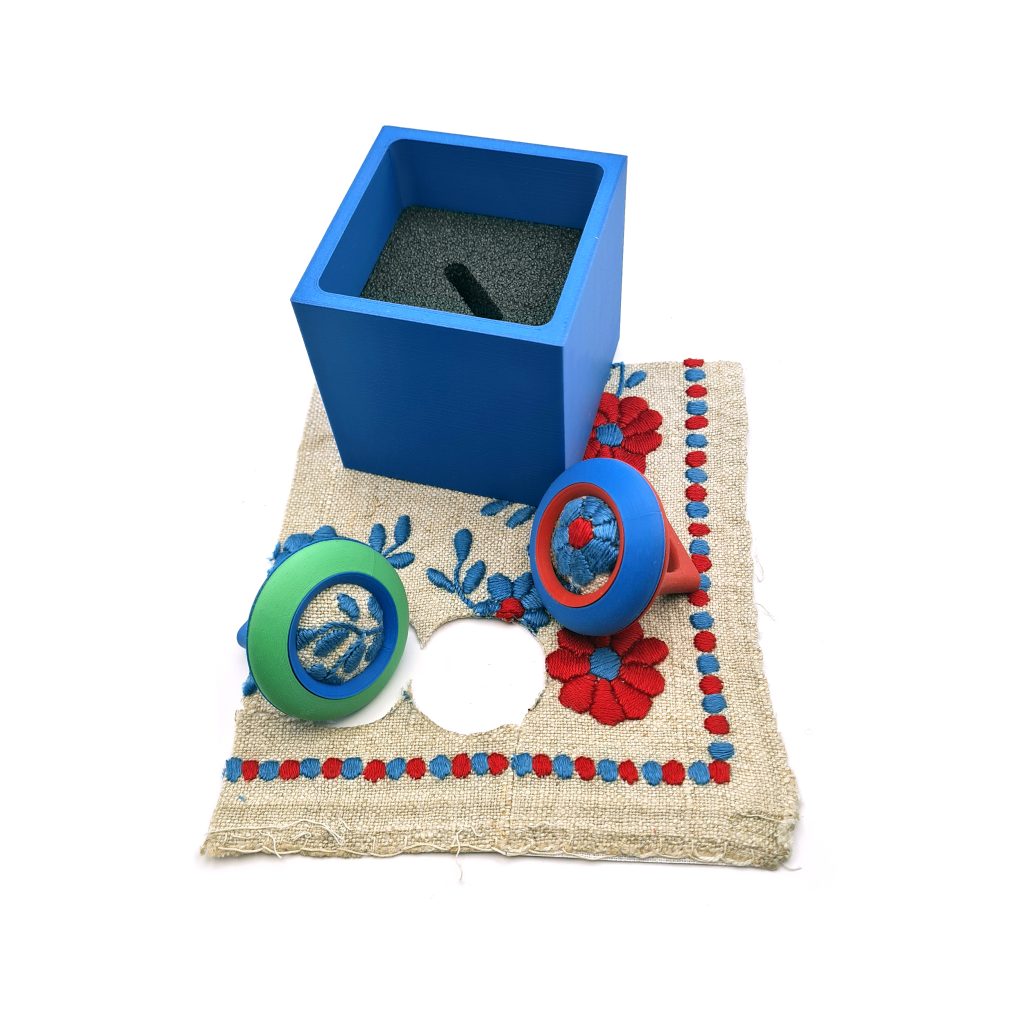
My Lampala Shield rings were created as part of an award-winning design competition.
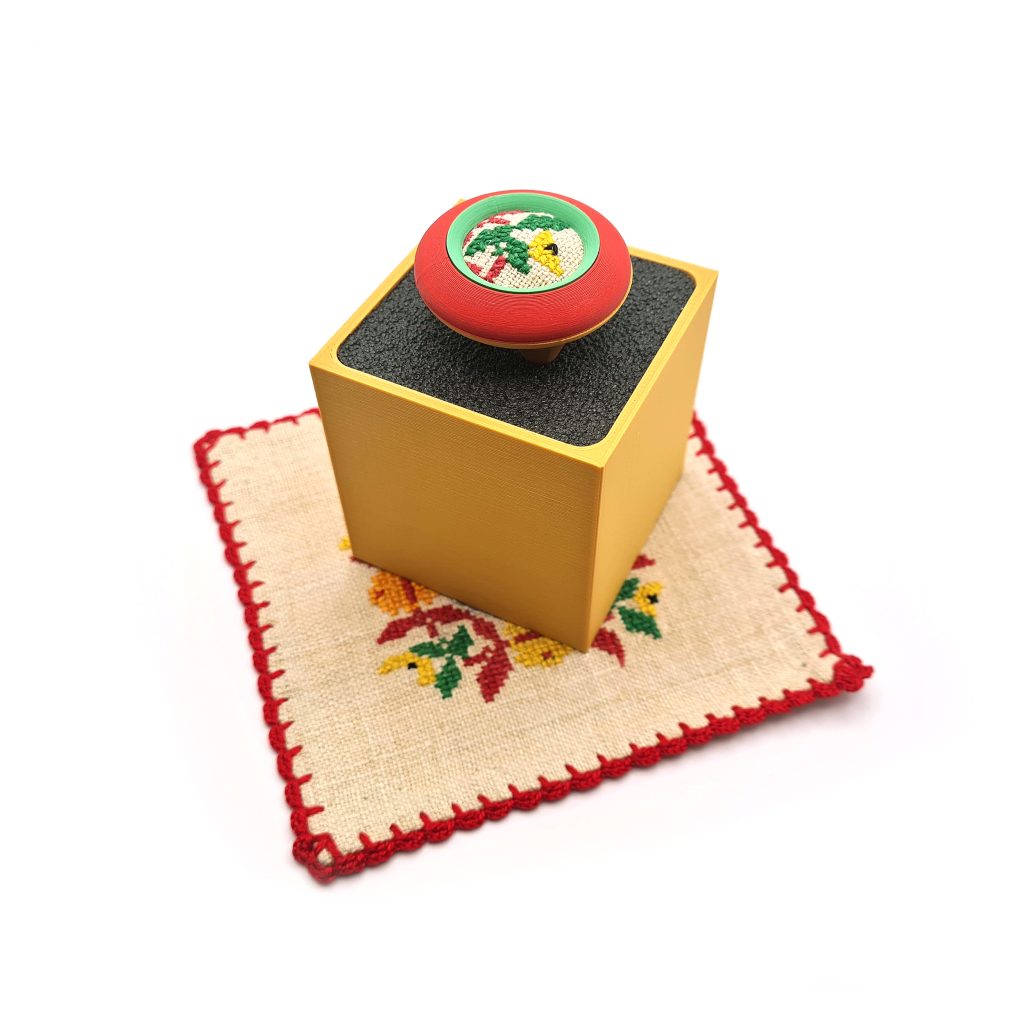
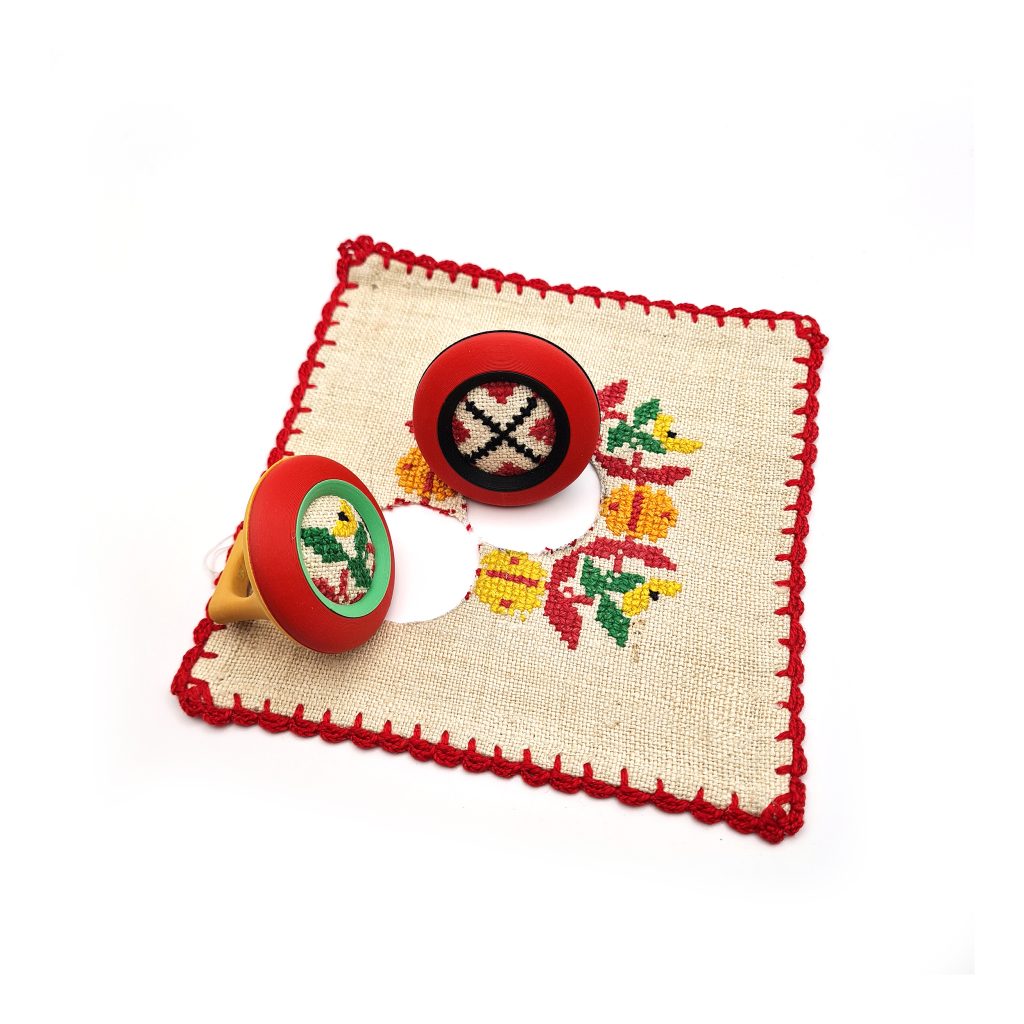
The Férc call by the Museum of Ethnography invited designers to reinterpret traditional Hungarian textile fragments that are no longer part of the museum’s official collection, but still hold cultural and aesthetic value.
The Lampala Shield rings, which received the Grand Prize, look boldly to the future through innovative technology, while also honoring the past through the use of traditional motifs.
My goal was to create a unique piece of jewelry where different techniques meet in harmony – allowing these museum-donated textiles to live on as wearable memories.
A piece of Hungary

My Lampala Shield rings were created as part of an award-winning design competition.
The Férc call by the Museum of Ethnography invited designers to reinterpret traditional Hungarian textile fragments that are no longer part of the museum’s official collection, but still hold cultural and aesthetic value.
The Lampala Shield rings, which received the Grand Prize, look boldly to the future through innovative technology, while also honoring the past through the use of traditional motifs.
My goal was to create a unique piece of jewelry where different techniques meet in harmony – allowing these museum-donated textiles to live on as wearable memories.
Why “Shield”?

For me, a shield symbolizes protection.
It safeguards what we hold dear – be it our culture, memories, or personal roots.
In this piece of jewelry, the shield can represent the preservation of heritage, or for the wearer, the protective, grounding force of belonging – to one’s roots, to community.

Why “Shield”?

For me, a shield symbolizes protection.
It safeguards what we hold dear – be it our culture, memories, or personal roots.
In this piece of jewelry, the shield can represent the preservation of heritage, or for the wearer, the protective, grounding force of belonging – to one’s roots, to community.

What makes it special?

One of its key features is uniqueness.
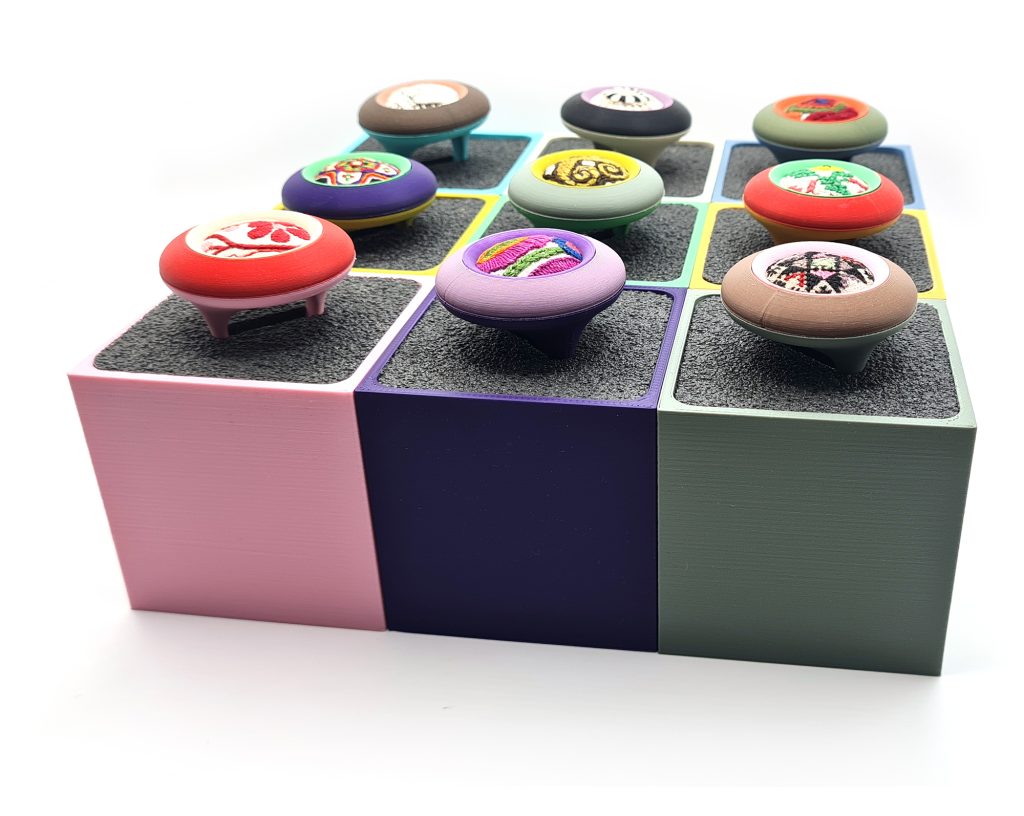
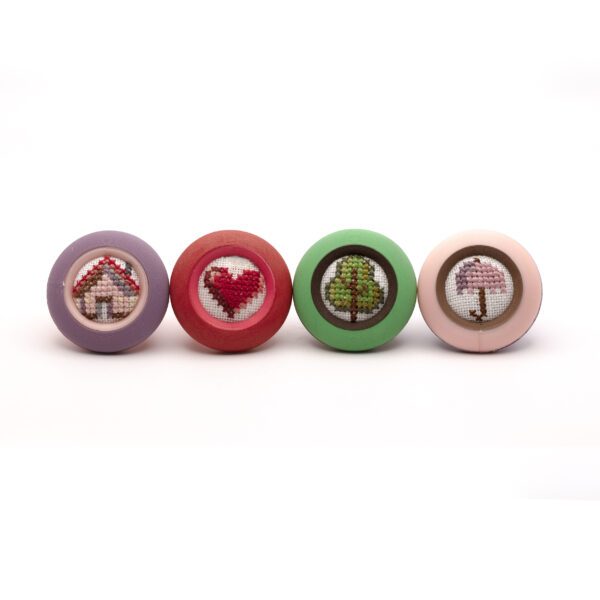
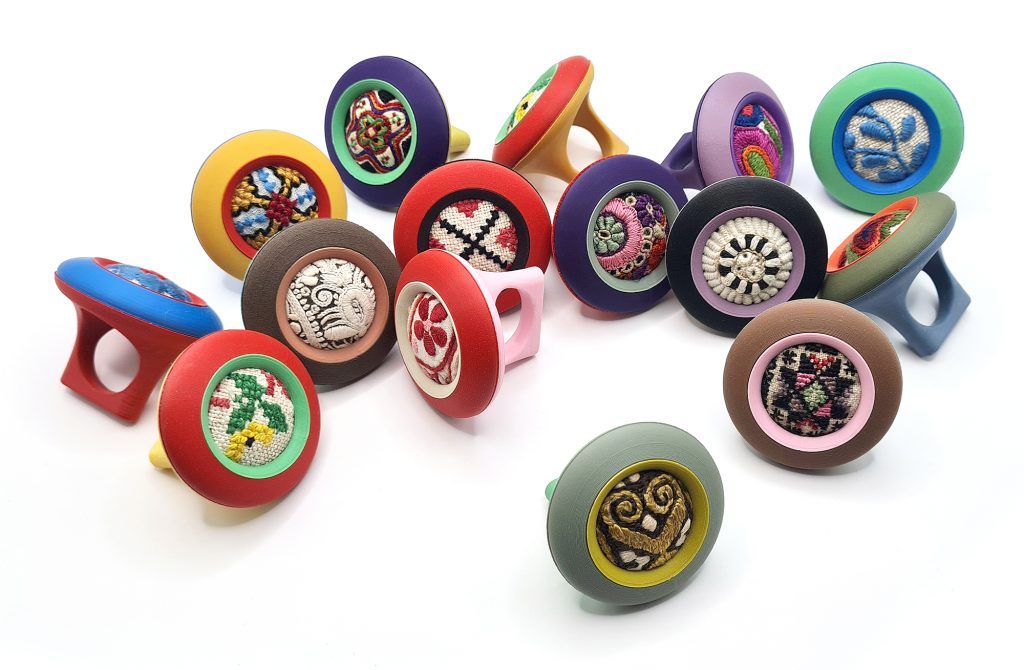
Each ring holds a different piece of embroidery or textile pattern, so no two are ever exactly alike.
I carefully select the color of each ring to complement the embroidery – always aiming for a look that feels modern, vibrant, and full of energy.

What makes it special?

One of its key features is uniqueness.
Each ring holds a different piece of embroidery or textile pattern, so no two are ever exactly alike.
I carefully select the color of each ring to complement the embroidery – always aiming for a look that feels modern, vibrant, and full of energy.

Packaging that’s more than just a box

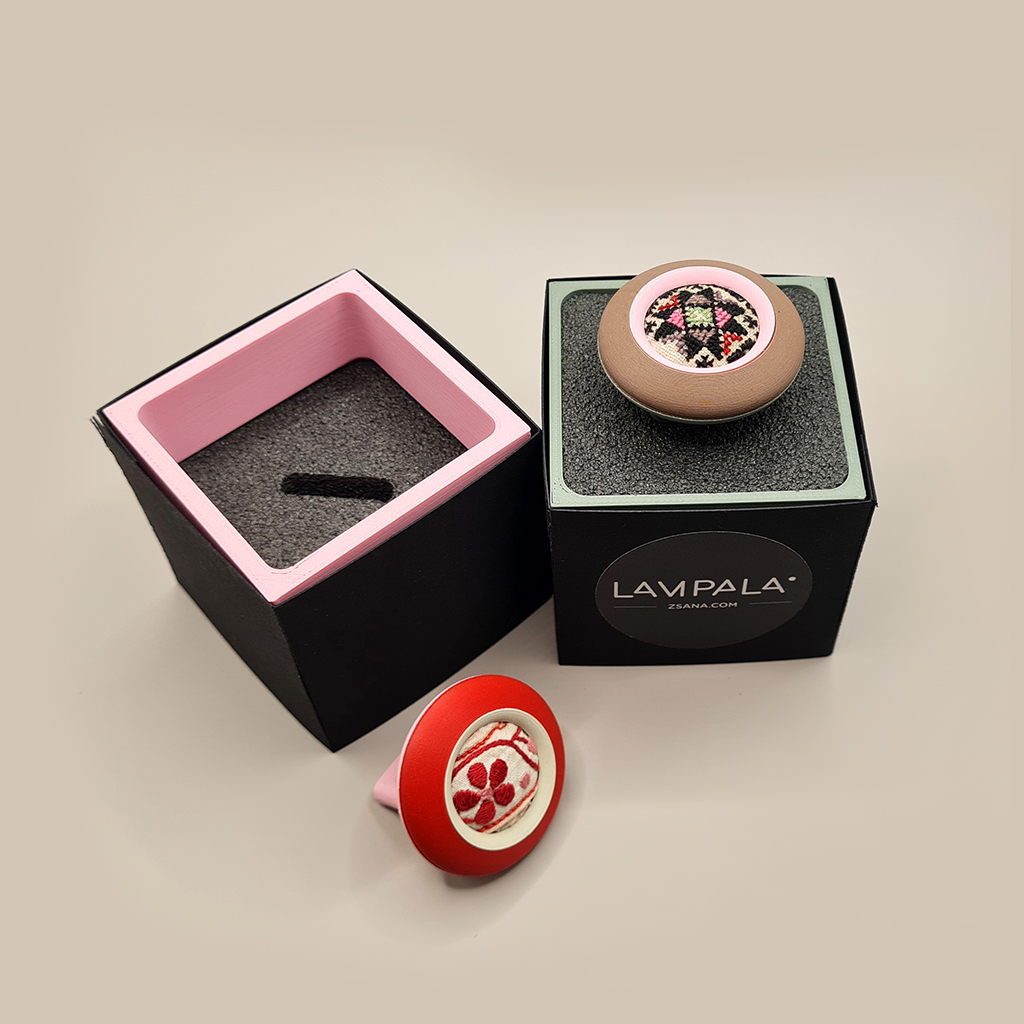
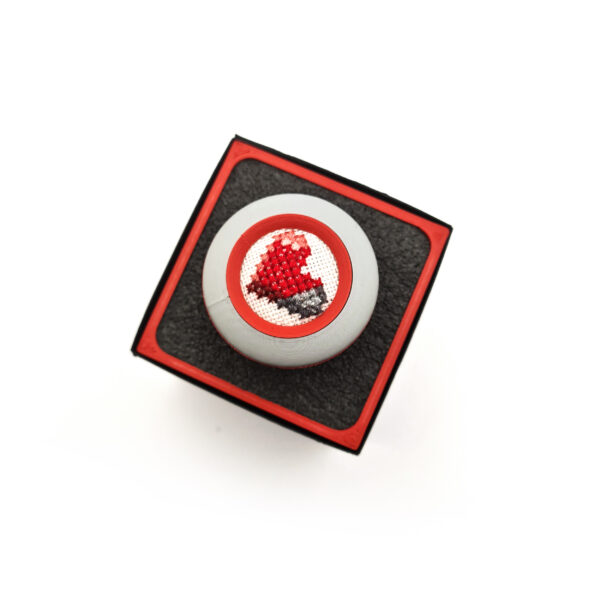
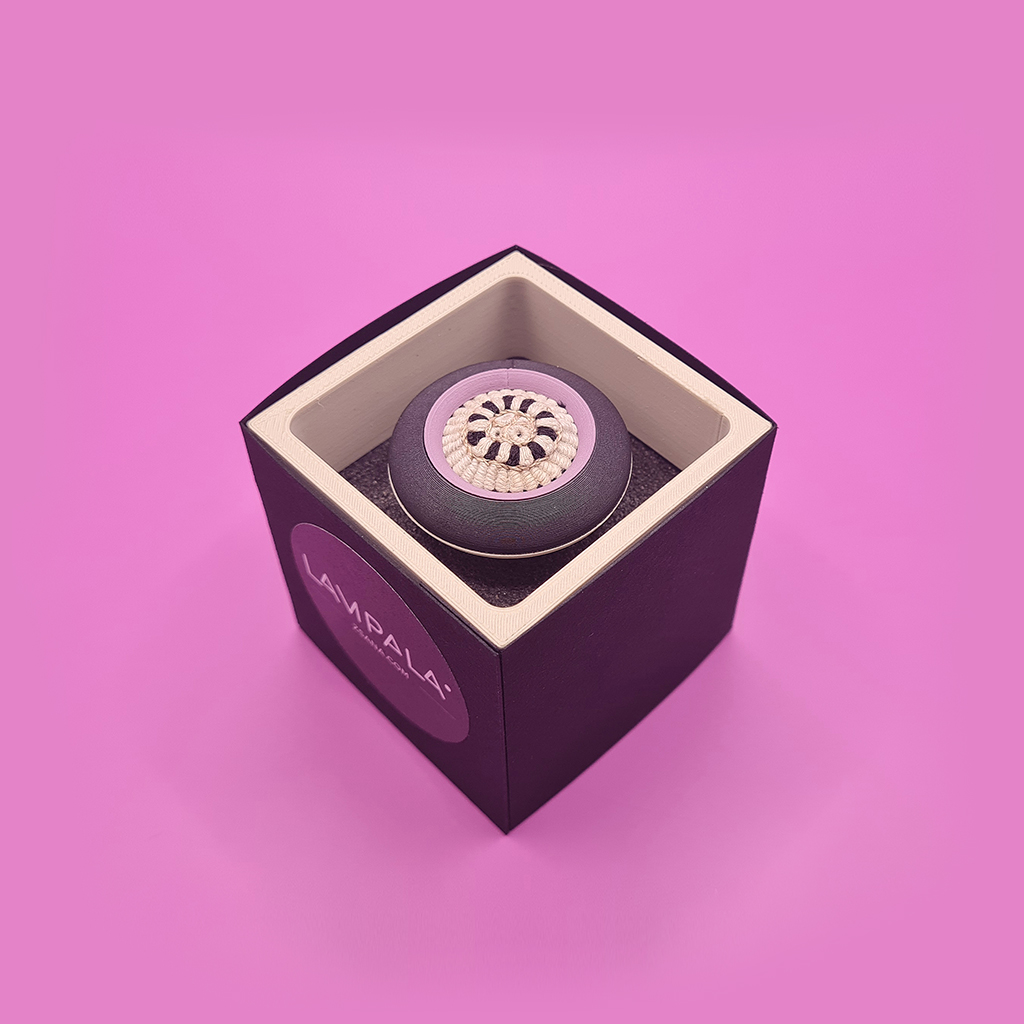
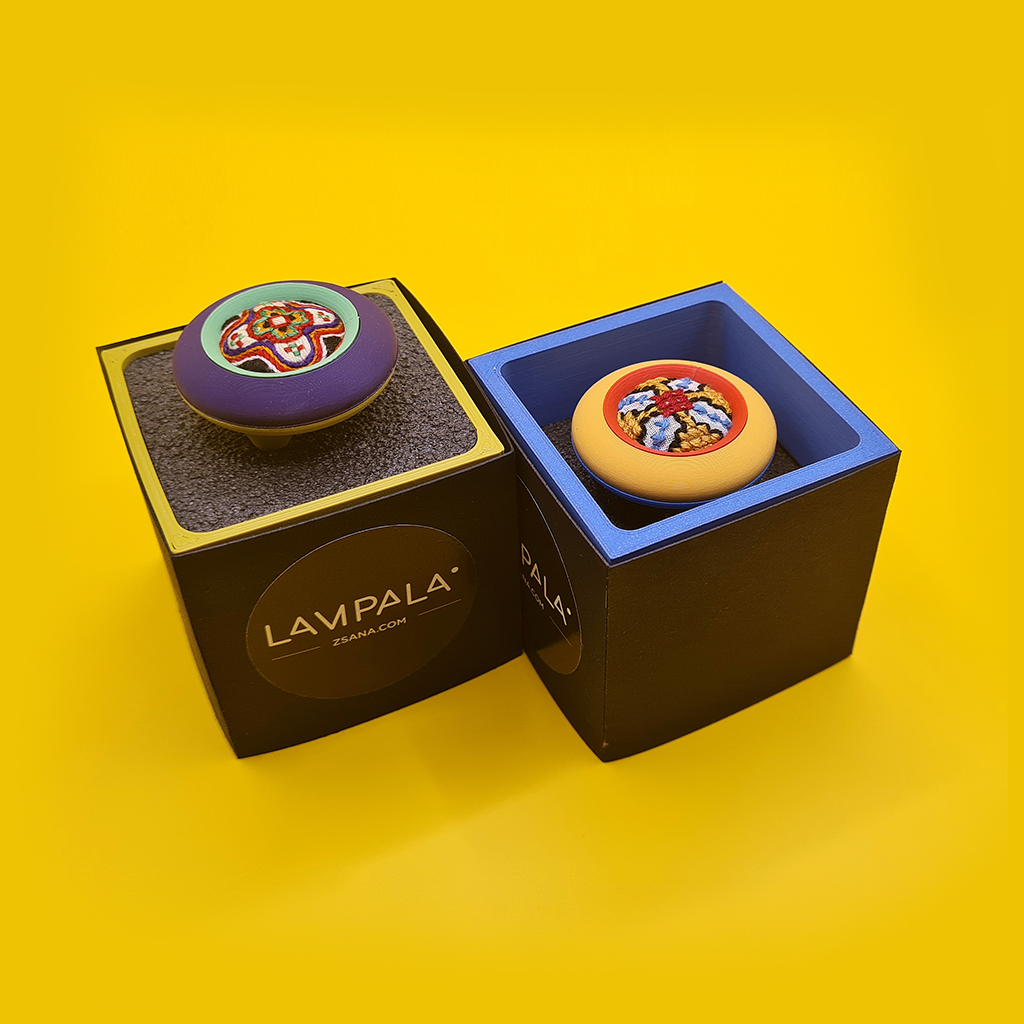
The ring comes in a custom-designed, 3D-printed cube-shaped box.
This packaging doesn’t just protect the ring – when turned over, it can be used as a miniature display, like a tiny personal exhibition.
This solution is not only aesthetically pleasing and practical, but also environmentally conscious:
it minimizes packaging waste while highlighting the uniqueness of the object inside.

Packaging that’s more than just a box

The ring comes in a custom-designed, 3D-printed cube-shaped box.
This packaging doesn’t just protect the ring – when turned over, it can be used as a miniature display, like a tiny personal exhibition.
This solution is not only aesthetically pleasing and practical, but also environmentally conscious:
it minimizes packaging waste while highlighting the uniqueness of the object inside.

What is it made of?

The choice of material was a conscious one.
Lampala Shield rings are made with 3D printing using PLA – a plant-based, biodegradable plastic derived from corn starch or sugarcane.
This material is non-toxic, its production is less harmful to the environment than petroleum-based plastics, and under the right conditions, it is compostable.
PLA can also be printed at lower temperatures, making the production process more energy-efficient.
This technology perfectly aligns with a concept that values both sustainability and cultural heritage.

What is it made of?

The choice of material was a conscious one.
Lampala Shield rings are made with 3D printing using PLA – a plant-based, biodegradable plastic derived from corn starch or sugarcane.
This material is non-toxic, its production is less harmful to the environment than petroleum-based plastics, and under the right conditions, it is compostable.
PLA can also be printed at lower temperatures, making the production process more energy-efficient.
This technology perfectly aligns with a concept that values both sustainability and cultural heritage.

What are you taking home?

A contemporary design ring – in which traditional museum embroidery lives on.

– Zsana Karakó / Lampala –